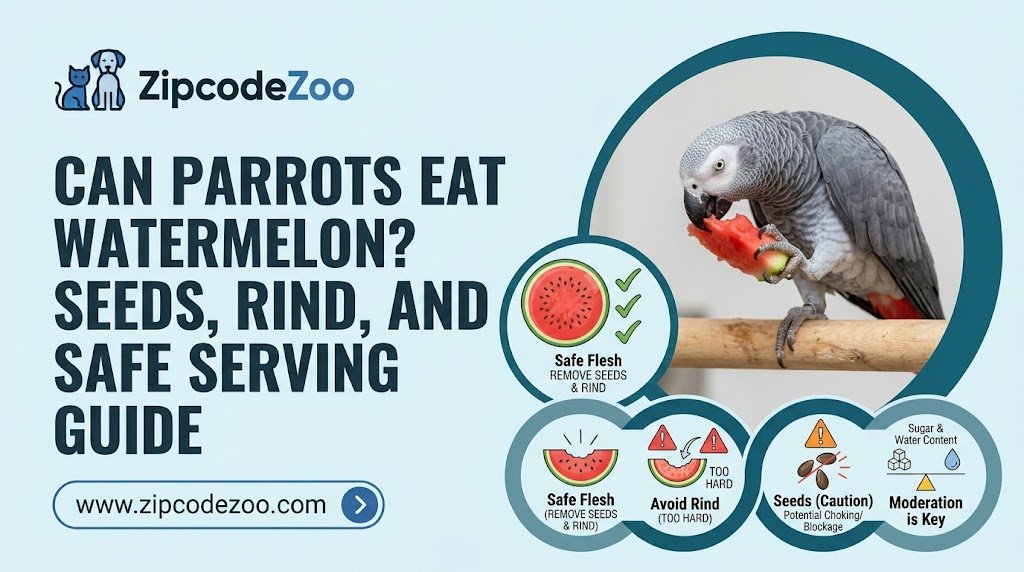
Yes, parrots can safely eat watermelon. In fact, many pet birds find this juicy, colorful fruit to be an exciting and delicious treat. Watermelon provides vital hydration, beneficial vitamins, and valuable antioxidants that support your parrot’s overall vitality when offered alongside a balanced, species-appropriate diet.
While the juicy red flesh is completely non-toxic, pet owners often wonder about the rest of the fruit. Can birds eat the black seeds? Is the crunchy green rind safe to chew on? How much fruit is too much? Here is everything you need to know about serving watermelon safely to parrots of all sizes.
The Nutritional Value of Watermelon for Parrots
In the wild, parrots forage on a diverse mix of seeds, nuts, vegetation, flowers, and seasonal fruits. While domestic parrots should receive most of their daily nutrition from high-quality formulated pellets and fresh vegetables, fresh fruits provide dietary variety, sensory enrichment, and helpful micronutrients.
Watermelon is roughly 92% water, making it one of the most hydrating fresh foods you can offer. Aside from moisture, watermelon contains several essential nutrients:
- Vitamin A (from Beta-Carotene): Crucial for maintaining healthy mucous membranes, vibrant plumage, strong eyesight, and proper immune function. Vitamin A deficiency is common in captive birds on all-seed diets, so beta-carotene-rich foods are an excellent addition.
- Vitamin C: A powerful antioxidant that helps support immune defense and tissue repair. While birds can synthesize their own Vitamin C, dietary antioxidants help reduce cellular oxidative stress.
- Potassium: An essential electrolyte that aids in muscle function, fluid balance, and healthy nerve conduction.
- Vitamin B6: Helps your parrot break down proteins and utilize energy efficiently.
- Lycopene: The natural plant pigment responsible for watermelon’s bright pink-red color. Lycopene is a potent antioxidant that supports cardiovascular and cellular health.
Can Parrots Eat Watermelon Seeds?
Unlike apple seeds, peach pits, cherry pits, and apricot kernels—which contain cyanogenic glycosides that release toxic cyanide when crushed—watermelon seeds are completely non-toxic to parrots.
Parrots can safely eat both black mature seeds and soft white immature seeds. In fact, many parrots enjoy the seeds more than the watery fruit flesh:
- Natural Foraging: Parrots are natural seed eaters. Cracking open the slippery black seeds gives smaller and medium-sized birds a stimulating mental and physical challenge.
- Healthy Fats and Minerals: Watermelon seeds contain trace amounts of healthy fatty acids, plant-based protein, magnesium, and zinc.
- Serving Raw vs. Dried: You can leave the seeds embedded directly in the melon slice, or you can pick them out, wash off the sticky juice, and let them dry to use later as training treats. Avoid feeding commercially packaged watermelon seeds intended for human snacking, as these often contain added salt, oils, and artificial flavorings.
Can Parrots Eat Watermelon Rind?
Yes, parrots can eat watermelon rind. The light green and white inner rind is firm, crunchy, and packed with fiber and citrulline (an amino acid that supports circulation). Many hookbills, including Conures, Amazons, and Cockatoos, love chewing on the fibrous texture of the rind even more than the soft flesh.
However, you must take a few precautions before offering the outer rind:
- Pesticide Residue: Watermelons are grown on the ground and are frequently treated with agricultural sprays, fertilizers, and protective waxes. Because parrots have small bodies and highly sensitive respiratory and digestive systems, chemical residues can pose a serious risk. Always scrub the melon thoroughly under warm running water using a vegetable brush before slicing.
- Choose Organic When Possible: If you plan to give your parrot large pieces of rind, organic melons are the safest choice to minimize pesticide exposure.
- Inspect for Mold or Spoilage: Inspect the outer skin carefully. Avoid feeding pieces of rind that show soft spots, bruising, discoloration, or signs of mold growth.
Potential Risks and Precautions
Watermelon is safe, but it should remain an occasional treat rather than a primary food source. Keep the following considerations in mind when introducing it to your bird’s menu:
1. High Sugar and Low Caloric Density
Although watermelon contains essential vitamins, its main components are water and simple fruit sugars (fructose). While fructose is natural, too much dietary sugar can contribute to weight gain, nutritional imbalances, and yeast overgrowth (such as Candida) in a bird’s digestive tract. Watermelon should never replace nutrient-dense leafy greens, orange vegetables, or high-quality pellets.
2. Watery Droppings (Polyuria)
Because watermelon has such high water content, you may notice that your parrot’s droppings look very loose or watery shortly after eating it. In most cases, this is polyuria (an excess of clear urine passing with the stool due to high fluid intake), not true diarrhea.
You can tell the difference by looking closely at the dropping:
- Polyuria: The solid fecal tube remains formed and distinct, but it sits in a larger puddle of clear liquid. This is temporary and usually resolves within several hours as the bird processes the extra hydration.
- Diarrhea: The solid fecal matter itself is unformed, pasty, liquid, or discolored. True diarrhea is a medical issue that warrants a call to an avian veterinarian.
3. Bacterial Growth and Cage Cleanliness
Watermelon’s moist, sugary nature makes it an ideal breeding ground for bacteria and mold, especially inside warm homes or near cage heat lamps. Sticky fruit juices can also attract fruit flies and coat your bird’s perches or feathers.
Never leave fresh watermelon in your parrot’s cage for more than two hours. Once your bird has finished snacking, promptly remove all leftover fruit, seeds, and rind, and wipe down the food bowl and surrounding cage bars with bird-safe cleaner or warm water.
How Much Watermelon Can Parrots Eat?
The ideal portion size depends on your parrot’s species, body weight, and baseline diet. In general, fresh fruit should make up no more than 5% to 10% of a parrot’s daily food intake.
- Small Parrots (Budgies, Cockatiels, Lovebirds, Parrotlets): A small cube (about half an inch square) or a single thin sliver containing a seed or two is plenty. Offer this once or twice a week.
- Medium Parrots (Conures, Senegals, Quakers, Caiques): One or two 1-inch chunks or a small wedge of rind with flesh attached. Offer 1 to 2 times weekly.
- Large Parrots (African Greys, Amazons, Eclectus, Cockatoos, Macaws): A medium wedge (2 to 3 inches) with rind, flesh, and seeds intact. Large macaws and cockatoos will happily shred the entire wedge in minutes. Offer once or twice per week as part of a varied fresh chop rotation.
Note for Eclectus Owners: Eclectus parrots have longer digestive tracts and distinct nutritional needs. While they thrive on fresh produce, their fruit intake must still be balanced carefully with fibrous, vitamin-rich vegetables, sprouted seeds, and leafy greens to prevent dietary spikes in sugar.
Fun and Creative Ways to Serve Watermelon
Parrots thrive on mental enrichment and varied textures. Instead of simply dropping a piece of fruit into a stainless steel dish, try these engaging preparation ideas:
Fresh Melon Kabob
Thread a thick chunk of watermelon (with the clean rind attached) onto a stainless steel foraging skewer alongside broccoli florets, bell pepper slices, and carrot rounds. Suspend the skewer from the top of the cage to encourage active climbing and foraging.
Frozen Summer Pops
On hot summer days, freeze small bite-sized melon chunks or puree fresh watermelon flesh with fresh mint and a splash of water, then freeze the mixture into ice cube trays. Offer a frozen cube in a shallow ceramic dish for a cooling, soothing beak workout.
Watermelon Seed Foraging Bowls
Collect the black seeds from a fresh watermelon, rinse away the pulp, and let them air-dry completely on a paper towel. Hide the dry seeds inside cardboard foraging boxes, untreated pine cones, or clean shredded paper to encourage natural search behaviors.
Chop Mix Topper
Finely dice a tablespoon of watermelon flesh and mix it directly into your parrot’s morning vegetable chop. The sweet natural juice helps coat bitter leafy greens like kale or dandelion greens, encouraging picky birds to sample unfamiliar vegetables.
Other Melons Parrots Can Eat
If your bird enjoys watermelon, you can safely introduce other culinary melons to their fresh food rotation. Like watermelon, these melons provide high hydration and a host of vitamins:
- Cantaloupe (Rockmelon): Exceptionally rich in Vitamin A (beta-carotene) and Vitamin C. Cantaloupe seeds are soft, edible, and loved by most hookbills.
- Honeydew: Mild, sweet, and high in potassium and Vitamin B6. Serve in small cubes with seeds removed or left in place.
- Canary Melon and Galia Melon: Safe alternative melon varieties that offer unique aromas and textures for adventurous eaters.
When to Consult an Avian Veterinarian
Watermelon is safe for healthy birds, but sudden dietary changes can occasionally cause digestive upset in sensitive individuals. Contact a qualified avian veterinarian if you observe any of the following signs after feeding new foods:
- Watery droppings that do not return to normal within 12 to 24 hours
- True diarrhea (loss of structure in the fecal portion of the dropping)
- Lethargy, fluffed feathers, or decreased vocalization
- Regurgitation or vomiting
- Persistent loss of appetite for regular pellets and staple foods
Summary Checklist
Feeding watermelon to your parrot is simple, safe, and rewarding when you follow a few basic rules:
- Wash the exterior thoroughly before cutting to remove dirt and chemicals.
- Offer the flesh, seeds, and rind in portions appropriate for your bird’s size.
- Treat watermelon as an occasional supplement, not a replacement for a core diet of pellets and fresh vegetables.
- Remove uneaten leftovers within two hours to prevent bacterial contamination.
By preparing it cleanly and serving it in moderation, watermelon makes a fantastic, hydrating enrichment food that your feathered companion will look forward to all season long.

Guidance Pet
at https://zipcodezoo.comSubscribe to bird Management
Signup for Weekly Updates
Related Posts
Best Fruits for Parrots: Safe Choices, Health Benefits, and Feeding Guide
Discover the healthiest, safest fruits for pet parrots, which seeds to avoid, and how to safely incorporate fresh produce into your bird’s daily diet.
9th Sep 2026 by
Guidance Pet
Comments (0)
No comments found.