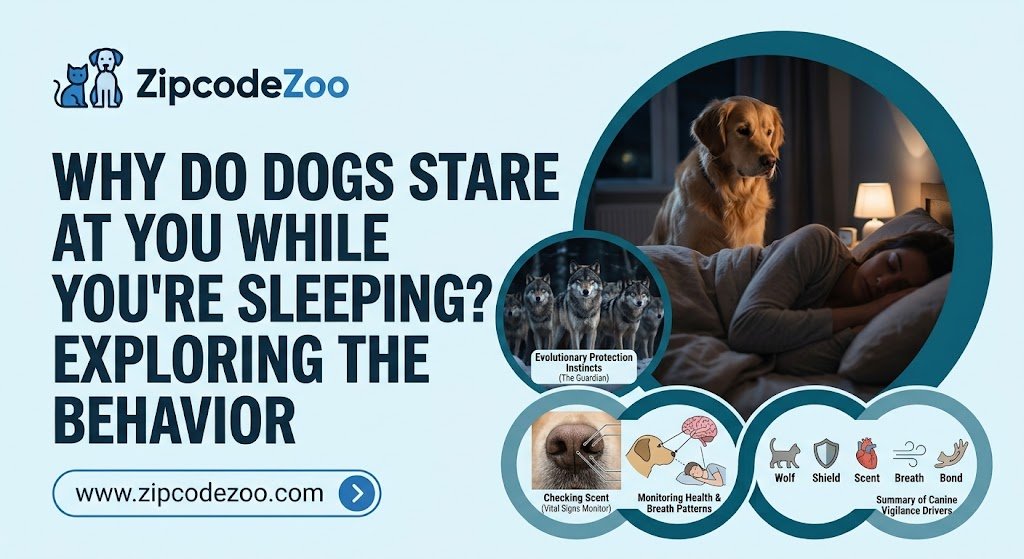
Waking up in the middle of the night to discover two dark eyes staring directly into your soul is an experience almost every dog parent knows well. Sometimes they are sitting bolt upright by the edge of the mattress; other times, their chin is resting on your chest, waiting patiently for your eyelids to flutter.
While it can feel a little spooky in the dark, nighttime staring is rarely sinister. Most of the time, dogs stare while you sleep because of differences in sleep patterns, anticipation of their morning routine, a desire for closeness, or simple curiosity about your state of rest. Understanding why your dog watches you during the quiet hours can help you meet their needs and ensure both of you get a peaceful night of rest.
1. Dogs Sleep Differently Than Humans
The primary reason your dog is awake to watch you sleep comes down to basic biology. Humans are monophasic sleepers, meaning our bodies are naturally wired to get one long stretch of sleep per night, usually lasting seven to nine hours.
Dogs, on the other hand, are polyphasic sleepers. They sleep in multiple short bursts across a 24-hour period, averaging anywhere from 10 to 14 hours total, but rarely in one uninterrupted block. Because dogs drift in and out of lighter sleep stages much faster than we do, they wake up multiple times throughout the night. During those brief waking periods, you are the most interesting, comforting, and important thing in the room to look at.
2. Anticipation and Internal Clocks
Dogs possess remarkably accurate circadian rhythms. If you usually get out of bed at 6:30 AM, your dog’s body knows when that time is approaching based on light changes, ambient morning sounds, and their own biological schedule.
When your dog stares at you in the early morning hours, they are often monitoring you for the tiniest signs of waking. They know the subtle clues that show you are shifting out of deep sleep, including:
- Changes in your breathing rate or depth
- Small muscle twitches or stretching
- Rolling over or shifting pillows
- Opening your eyes even for a fraction of a second
The moment they detect one of these signs, their gaze locks on, ready to celebrate the start of the day, head outside for a bathroom break, or remind you that breakfast is due.
3. Affection, Comfort, and Social Bonding
For a companion animal, being close to their human is the safest and most rewarding place to be. Mutual eye contact between dogs and their owners releases oxytocin—often called the love hormone—in both species.
When your dog gazes at you while you are resting, they are often simply feeling secure in your presence. In the wild, canines sleep together in family groups for warmth and security. Watching over a sleeping pack member is a natural social behavior that reinforces comfort and trust.
4. An Urgent Need: Bathroom, Thirst, or Discomfort
Sometimes a fixed stare is your dog’s polite way of asking for help without making loud noises that might get them scolded. If your dog rarely stares at night but suddenly starts standing over you, they may be trying to communicate an immediate physical need.
Common reasons include:
- Needing to go outside: An upset stomach or a full bladder often leads a dog to sit near your face, hoping their presence will wake you before an accident happens.
- Thirst: An empty water bowl in the middle of the night can leave a dog pacing and looking to you to refill it.
- Temperature issues: Some dogs get chilly at night, especially short-coated or lean breeds. Providing warm bedding, such as heated dog blankets, can keep them settled through cold nights.
5. Anxiety and Nighttime Restlessness
Not all staring stems from calm affection or routine. Dogs that struggle with separation anxiety, fear of the dark, or sensitivity to outdoor noises often seek out their owners during the night for reassurance.
If a storm is rolling in, or if nocturnal wildlife is rustling outside the window, a nervous dog may fixate on you to gauge whether they should be worried. If you are sleeping peacefully, it signals to them that the environment is safe. For puppies or rescue dogs that feel vulnerable at night, tools like heartbeat toys for nervous dogs can mimic the steady rhythm of a companion and help them settle down without needing to watch you continuously.
6. Boredom and Pent-Up Energy
If your dog spent most of the previous afternoon napping on the couch while you worked, they might simply have too much energy left over when bedtime arrives. A dog who hasn’t had sufficient physical and mental stimulation will wake up frequently during the night looking for something to do.
To help your dog sleep soundly alongside you, ensure they get adequate daily movement. Making sure you understand why exercise is important for your dog is the first step in creating a balanced routine. Along with physical walks, engaging their brain before dinner with interactive puzzle toys can tire out their mind, leading to deeper, uninterrupted sleep for everyone.
7. How to Read Your Dog’s Nighttime Body Language
To understand exactly why your dog is watching you, look at their overall body posture rather than just their eyes:
- Soft, relaxed gaze: Loose posture, soft blinking, lying down with paws tucked. This indicates contentment, affection, and casual observation.
- Alert, stiff posture: Ears forward, mouth closed, body held rigid. Your dog has likely heard a noise or is actively waiting for an immediate cue to jump into action.
- Apprehensive glances: Low head carriage, slight lip-licking, or shifting their gaze sideways into a subtle dog side eye expression. This usually points to mild stress, uncertainty, or discomfort.
8. When Nighttime Staring Indicates a Medical Concern
While staring while you sleep is usually harmless, changes in nighttime behavior should not be ignored, especially in senior pets.
Canine Cognitive Dysfunction (CCD)
Similar to dementia in humans, Canine Cognitive Dysfunction affects older dogs and often disrupts their sleep-wake cycles. Dogs with CCD may wake up in the middle of the night feeling disoriented. They might stand in the bedroom staring blankly at you, at walls, or into corners, sometimes pacing or whining softly. If your older dog seems confused, gets stuck behind furniture, or reverses their sleep schedule, schedule an evaluation with your veterinarian.
Sensory Loss or Pain
Dogs experiencing progressive vision loss, hearing impairment, or chronic pain (such as arthritis) can become restless in the dark. Losing their primary senses makes nighttime disorienting, causing them to stay physically close to you and watch you for stability. If the staring is accompanied by panting, stiffness, trembling, or sudden behavioral changes, consult your vet to rule out underlying pain or illness.
How to Stop Unwanted Nighttime Staring
If your dog’s staring is harmless but frequently startles you awake, a few simple adjustments can encourage better nighttime boundaries:
- Set up a dedicated sleeping spot: If your dog sleeps on your bed, move a comfortable dog bed to the floor next to you. Providing their own cozy space with options like safe heated beds can encourage them to curl up and stay put.
- Establish a predictable evening routine: Take your dog out for a final bathroom trip right before you turn off the lights, and keep evening feeding and bedtime hours consistent.
- Avoid rewarding the stare: If you immediately talk to, pet, or feed your dog every time they wake you by staring, you accidentally teach them that staring is a reliable way to get attention. Instead, ignore the behavior and only interact once you have deliberately decided to get out of bed.
For the vast majority of dogs, staring at you while you sleep is simply a quiet expression of devotion, routine anticipation, and their natural rhythm of rest. As long as your dog is healthy, comfortable, and relaxed, you can take comfort in knowing you have a dedicated companion keeping gentle watch through the night.

Guidance Pet
at https://zipcodezoo.comSubscribe to dog Management
Signup for Weekly Updates
Related Posts

Dog Side Eye
Decoding Your Dog’s Side Eye Gaze Dog owners are frequently puzzled or amused when their […]
22nd Jan 2024 by
Guidance Pet

How much is dog grooming in 2024?
Dog Grooming Costs Proper grooming is essential for keeping dogs healthy, clean, and comfortable. However, […]
22nd Jan 2024 by
Guidance Pet

Best Family Dogs
Having a dog can be an incredibly rewarding experience for a family. Dogs provide love […]
21st Jan 2024 by
Guidance Pet

Dachshund (Long Haired)
The Dachshund dog breed, often called “wiener dogs” or “sausage dogs” due to their long, […]
21st Jan 2024 by
Guidance Pet

The Ultimate Guide to Heated Dog Blankets: Comfort and Warmth for Your Furry Friend
Keeping Dogs Warm With Soft Heated Blankets When the weather gets cold, dogs get chilly […]
16th Jan 2024 by
Guidance Pet