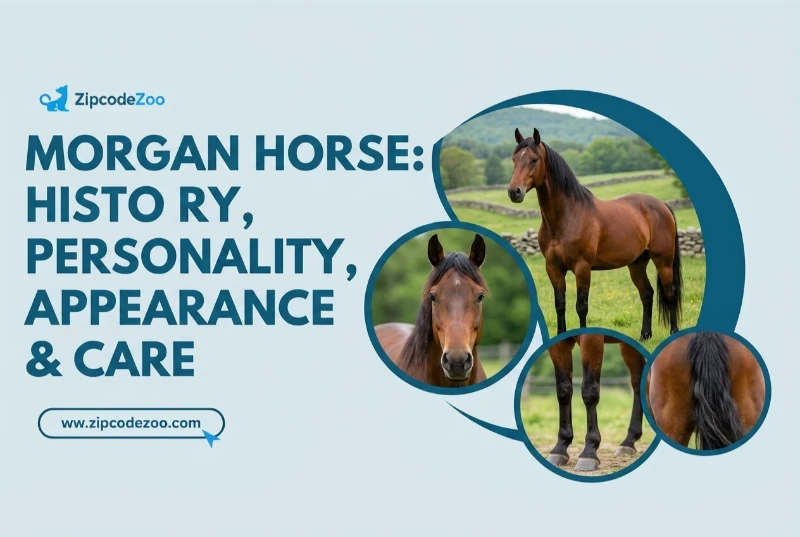
The Morgan horse stands as one of the earliest and most influential horse breeds developed in the United States. Tracing its lineage back to a single foundation sire, this breed is renowned for its extraordinary versatility, friendly disposition, and distinctively elegant appearance. Originally a true all-purpose workhorse, the modern Morgan excels in nearly every equine discipline, from high-level competition to gentle companionship.
History: The Legacy of One Singular Horse
Unlike most breeds that evolved through the gradual crossing of various species, the Morgan breed traces its origin directly to one extraordinary stallion named Figure .
-
Figure (Later known as Justin Morgan): Foaled in Massachusetts in 1789, Figure was a small horse, standing only about 14 hands high. Despite his size, he possessed phenomenal strength, speed, and endurance, frequently out-pulling and out-running much larger horses.
-
The Owner: He was owned by Justin Morgan, a school teacher and music composer who moved to Vermont. The horse became legendary throughout New England for his ability to clear land, pull logs, race under saddle, and work endlessly.
-
A “Prepotent” Sire: Most remarkably, Figure was extremely “prepotent, ” meaning he passed his unique physical traits, intelligence, and temperament to all his offspring, regardless of the mare he was bred to. This allowed his distinct type to establish a new breed quickly.
-
Historical Roles: In the 19th century, Morgans served diverse roles, including:
-
Farm & Work Horses: Clearing forests and plowing fields in New England.
-
Transportation: Pulling stagecoaches and carriage horses for their speed and stamina.
-
Cavalry Mounts: They were the preferred mount for the U.S. Cavalry during the Civil War due to their bravery, hardiness, and reliability.
-
Foundation Stock: Morgans contributed heavily to the development of other iconic American breeds, including the American Quarter Horse, Standardbred, and Tennessee Walking Horse.
-
Today, the American Morgan Horse Association (AMHA), established in 1909, preserves and promotes this historic breed.
Personality & Temperament: “The Horse That Chooses You”
The Morgan horse is widely celebrated for its gentle, cooperative, and highly intelligent nature. They are often described as having a deep desire to please their human partners.
-
Friendly and People-Oriented: Morgans genuinely seem to enjoy human interaction and form strong bonds with their owners. This has earned them the nickname “the horse that chooses you. “
-
Intelligent and Eager to Please: Their high intelligence makes them quick learners, but their willingness to work means they are generally straightforward to train and pleasant to handle.
-
Alert and Spirited but Sensible: They possess natural animation, presence, and spiritedness, yet they rarely lose their heads. They are considered courageous and steady.
-
Versatile and Adaptable: Their temperament allows them to excel in various environments and disciplines. They are calm enough for beginners and therapeutic riding, yet athletic enough for advanced sports.
Physical Appearance: Elegant Strength
The Morgan has a very distinct, recognized conformation characterized by a compact build, powerful musculature, and refined, expressive features.
-
Size: They are generally smaller than many other full-sized horse breeds, typically standing between 14.1 and 15.2 hands high (57 to 62 inches). They usually weigh between 900 and 1,100 pounds.
-
Body Type: Compact and robust with a short back, broad loins, a deep chest, and a well-sprung rib cage. The group is long and level.
-
Head & Neck: They have a refined, expressive head with a broad forehead, large, prominent eyes, and small, well-shaped ears. The neck is elegantly arched, upright, and well-set onto laid-back shoulders.
-
Legs: Strong, muscular legs with short cannons and relatively long forearms.
-
Mane & Tail: Known for having a thick, abundant mane and tail. The tail is attached high and carried gracefully and straight.
-
Colors: Morgans come in nearly every coat color. The most common are bay, black, and chestnut . However, the registry permits all colors, including palomino, buckskin, grey, roan, dun, and pinto patterns.
Versatility: What Are They Used For?
The true hallmark of the Morgan breed is its ability to adapt and excel in almost any equestrian pursuit.
-
Show Ring: They dominate in Morgan-only shows and compete successfully in open breeds in categories like:
-
Saddle Seat: Showcasing their natural animation and high-stepping gaits.
-
Western Pleasure: Displaying their calm temperament and smooth movement.
-
Hunter Pleasure: Highlighting their athleticism and pleasant manner.
-
-
Sport Disciplines: Morgans hold their own in dressage, show jumping, eventing, and combined driving.
-
Endurance & Trail: Their stamina, courage, and soundness make them top choices for competitive endurance and recreational trail riding.
-
Work & General Use: They continue to serve as working ranch horses, stock horses, and excellent therapeutic riding mounts.
Care & Health
Morgans are generally known as hardy, “easy keepers” with long lifespans, often living into their 30s with proper care.
| Category | Care Recommendations |
| Diet | As “easy keepers,” they require less food to maintain their weight. Obesity is a major risk. A controlled diet of high-quality grass or hay is usually sufficient. Grains should be carefully rated. Avoid sweet foods and overfeeding. |
| Grooming | Standard equine grooming is suitable. Their thick manes and tails require regular brushing (at least once or twice a week) to prevent tangles and maintain health. Daily hoof cleaning is essential. |
| Exercise | Consistent exercise is crucial for maintaining metabolic health and preventing obesity. Morgans are active and athletic, benefiting from regular work or plenty of shift time. |
| Common Health Issues |
Obesity: Their predisposition to gain weight quickly can lead to Equine Metabolic Syndrome and laminitis if not managed.
Polysaccharide Storage Myopathy (PSSM): A genetic muscle disorder that can cause stiffness and pain; Manageable with a specialized low-starch, high-fat diet. |
| Training | They respond well to gentle, patient, and consistent training. Build trust early, and they will follow cues willingly. Their eagerness to please makes them suitable for riders and owners of all levels, including beginners and youth. |

Guidance Pet
at https://zipcodezoo.comSubscribe to horse Management
Signup for Weekly Updates
Related Posts

Chestnut (horse anatomy)
Anatomy and Function of the Chestnut in Horses The chestnut, also known as the “night […]
25th Jan 2024 by
Guidance Pet

How to make a Horse in little alchemy
Horse Horse is an element that can be found in Little Alchemy. Little Alchemy 1 A […]
25th Jan 2024 by
Guidance Pet

How Much Does a Horse Weigh?
Keeping your horse at an ideal weight is very important for its health and performance. […]
24th Jan 2024 by
Guidance Pet
Comments (0)
No comments found.